
5 Common Misconceptions About AI in Business and How to Overcome Them


Understanding AI in Business
Artificial Intelligence (AI) is transforming the business landscape, yet several misconceptions about its role and capabilities persist. These misunderstandings can hinder its effective implementation. By addressing and overcoming these misconceptions, businesses can fully leverage AI's potential.
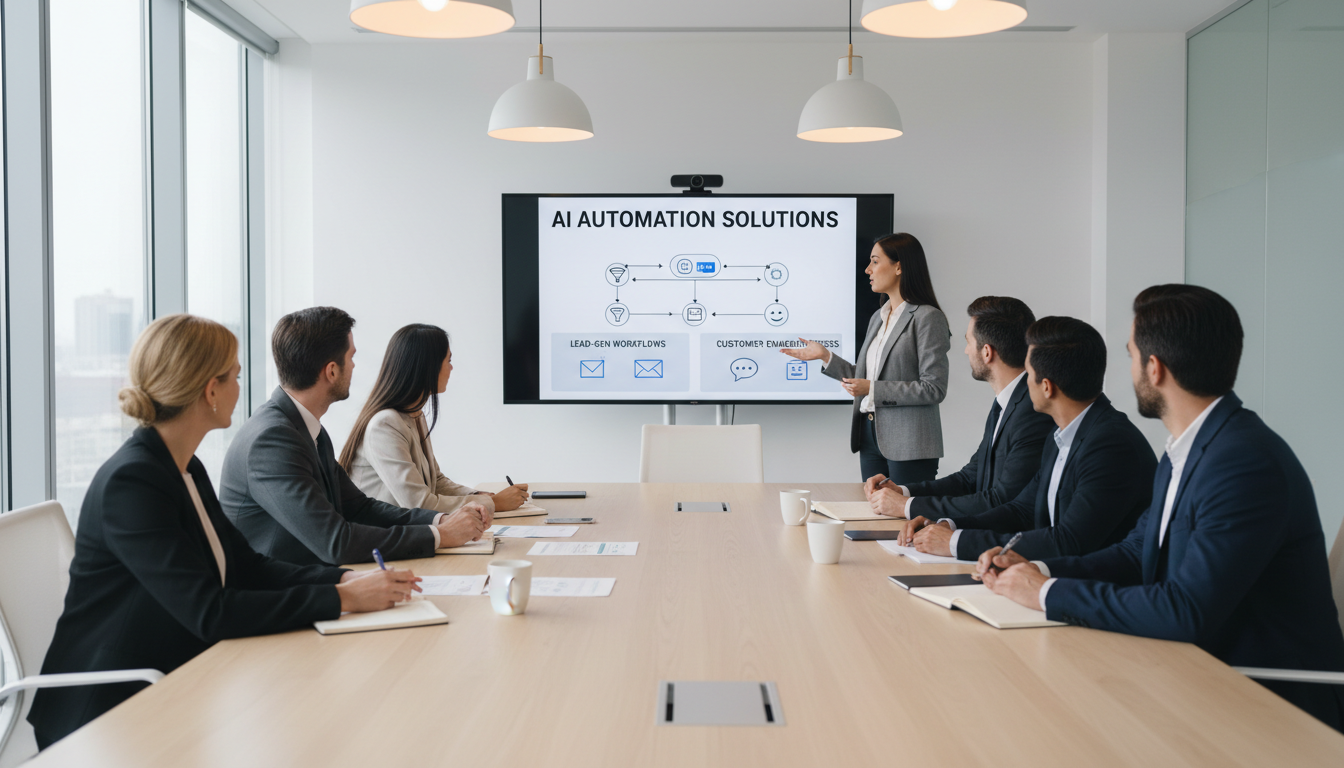
Misconception 1: AI Will Replace Human Jobs
A common fear is that AI will replace human jobs, leading to widespread unemployment. While AI does automate certain tasks, it often complements human workers rather than replacing them. By automating repetitive tasks, AI allows employees to focus on more complex and creative projects.
To overcome this misconception, businesses should focus on upskilling their workforce. Training programs can help employees learn how to work alongside AI, enhancing productivity and innovation.
Misconception 2: AI Is Only for Large Corporations
Many small and medium-sized enterprises (SMEs) believe that AI is only applicable to large corporations with vast resources. However, AI solutions are becoming increasingly accessible and affordable for businesses of all sizes. Cloud-based AI services, for example, offer scalable solutions without the need for extensive infrastructure.

SMEs can start small by implementing AI tools in specific areas, such as customer service or data analysis, to gradually integrate AI into their operations.
Misconception 3: AI Is Too Complex to Implement
Some business leaders shy away from AI, thinking it's too complex to implement effectively. While AI does involve sophisticated technology, many platforms offer user-friendly interfaces and support to streamline the integration process.
Partnering with experienced AI vendors can simplify implementation. These vendors provide the necessary tools and guidance to ensure a smooth transition.

Misconception 4: AI Can Solve Any Problem
There's a myth that AI can be a magical solution to all business problems. In reality, AI is a powerful tool that requires clear objectives and quality data to be effective. Businesses must define specific goals and ensure they have the right data infrastructure in place.
To overcome this misconception, companies should conduct thorough assessments to determine where AI can add the most value and set realistic expectations about its capabilities.
Misconception 5: AI Lacks Human Touch
Some argue that AI lacks a human touch and cannot understand emotions or nuances in communication. While AI is not a substitute for human interaction, advancements in natural language processing and machine learning have significantly improved AI's ability to interpret and respond to human emotions.
Businesses can enhance customer experience by integrating AI with human support, ensuring a balanced approach that satisfies customer needs effectively.

By addressing these misconceptions, businesses can harness the power of AI to drive growth, efficiency, and innovation. Embracing AI with an informed perspective can lead to transformative outcomes across various industries.